
| |

Tips for Healthcare Professionals

COPING WITH STRESS & COMPASSION FATIGUE

As a healthcare professional, you may face stress on the job under usual conditions due to long shifts, competing responsibilities, and witnessing or hearing about difficult patient experiences. As a responder on the front lines of the coronavirus disease 2019 (COVID-19) pandemic, you are likely working longer hours, seeing loved ones less, and working in a more stressful environment. At the same time, you may be coping with the mental health effects that all types of disasters, including public health
emergencies, often have. As such, you may be noticing signs of stress and distress in yourself and your coworkers.

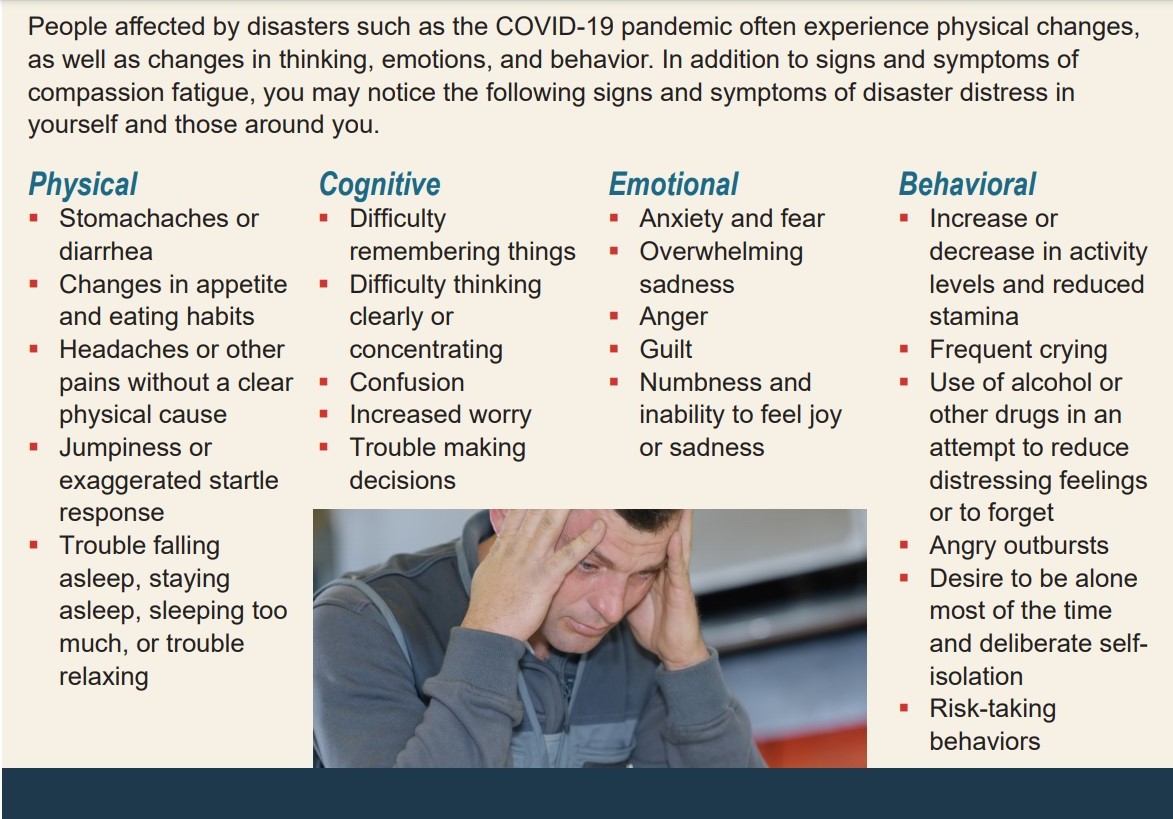
This tip sheet explores stress and compassion fatigue, as well as signs of distress after a disaster. It identifies ways to cope and enhance resilience, along with resources for more information and support.

Similar Posts

  • Reach Out for COVID-19 Help

    The Employee Assistance Program, in conjunction with UMMC, continues to monitor the situation regarding the spread of COVID-19 while following CDC protocol and guidelines. We are committed to supporting the behavioral health needs of the campus community and remain open and accessible to employees and family members. We can be reached on our main line…

  • Facebook Can Make Users Feel Worse

    A University of Michigan study found that time spent on Facebook could decrease a person’s mood.  Other studies have found that increased envy can occur while reading other people’s Facebook pages.  On the other hand, a study at the University of Wisconsin found that Facebook users could increase their self-esteem.  In general, it seems that…

  • Stress Can Interfere with Sleep

    How Can I Sleep Better? Stress often interferes with sleep, which then can make the next day more difficult to manage.  If this continues, it can lead to depression, anxiety, irritability, and forgetfulness.  Many anti-depressants are effective because they help people sleep better. Some people want to try natural ways to increase sleep and then…

  • Good Mood Foods

    In the January 14, 2014 Washington Post, author Maya Dangerfield writes about food that can boost your mood. She states, “Researchers have studied the association between foods and the brain and identified 10 nutrients that can combat depression and boost mood: calcium, chromium, folate, iron, magnesium, omega-3 fatty acids, Vitamin B6, Vitamin B12, Vitamin D…