
| |

Tips for Healthcare Professionals

COPING WITH STRESS & COMPASSION FATIGUE

As a healthcare professional, you may face stress on the job under usual conditions due to long shifts, competing responsibilities, and witnessing or hearing about difficult patient experiences. As a responder on the front lines of the coronavirus disease 2019 (COVID-19) pandemic, you are likely working longer hours, seeing loved ones less, and working in a more stressful environment. At the same time, you may be coping with the mental health effects that all types of disasters, including public health
emergencies, often have. As such, you may be noticing signs of stress and distress in yourself and your coworkers.

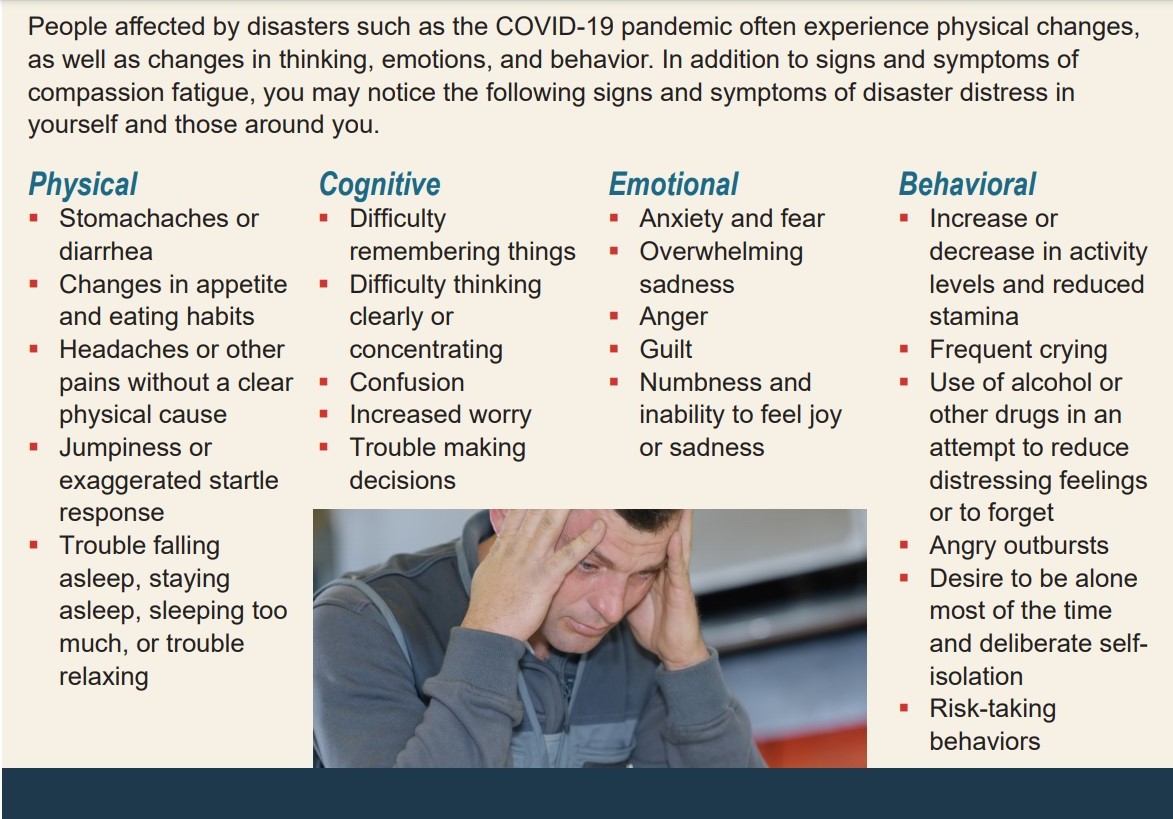
This tip sheet explores stress and compassion fatigue, as well as signs of distress after a disaster. It identifies ways to cope and enhance resilience, along with resources for more information and support.

Similar Posts

  • Aging Gracefully

    How to Maintain Brain Health As we age, we need to exercise our brains in various ways to keep them sharp.  Some ways to do that are: Exercise -especially aerobic exercise such as running, walking, playing basketball, dancing, hiking, swimming, and tennis. Eat right-vegetables, fruits, protein and be sure to drink enough water. Stay away…

  • Stressful Times in Baltimore

    The city of Baltimore is experiencing a difficult time. In the aftermath of the funeral of Freddie Gray, violence and the destruction of property occurred in parts of the city. The media has been showing constant coverage of the events. It may feel like it is impossible to escape newscasts and stories and images of…

  • Good Mood Foods

    In the January 14, 2014 Washington Post, author Maya Dangerfield writes about food that can boost your mood. She states, “Researchers have studied the association between foods and the brain and identified 10 nutrients that can combat depression and boost mood: calcium, chromium, folate, iron, magnesium, omega-3 fatty acids, Vitamin B6, Vitamin B12, Vitamin D…